THE DEBUT CHAPTER: Polydor & The Mick Hucknall Sessions
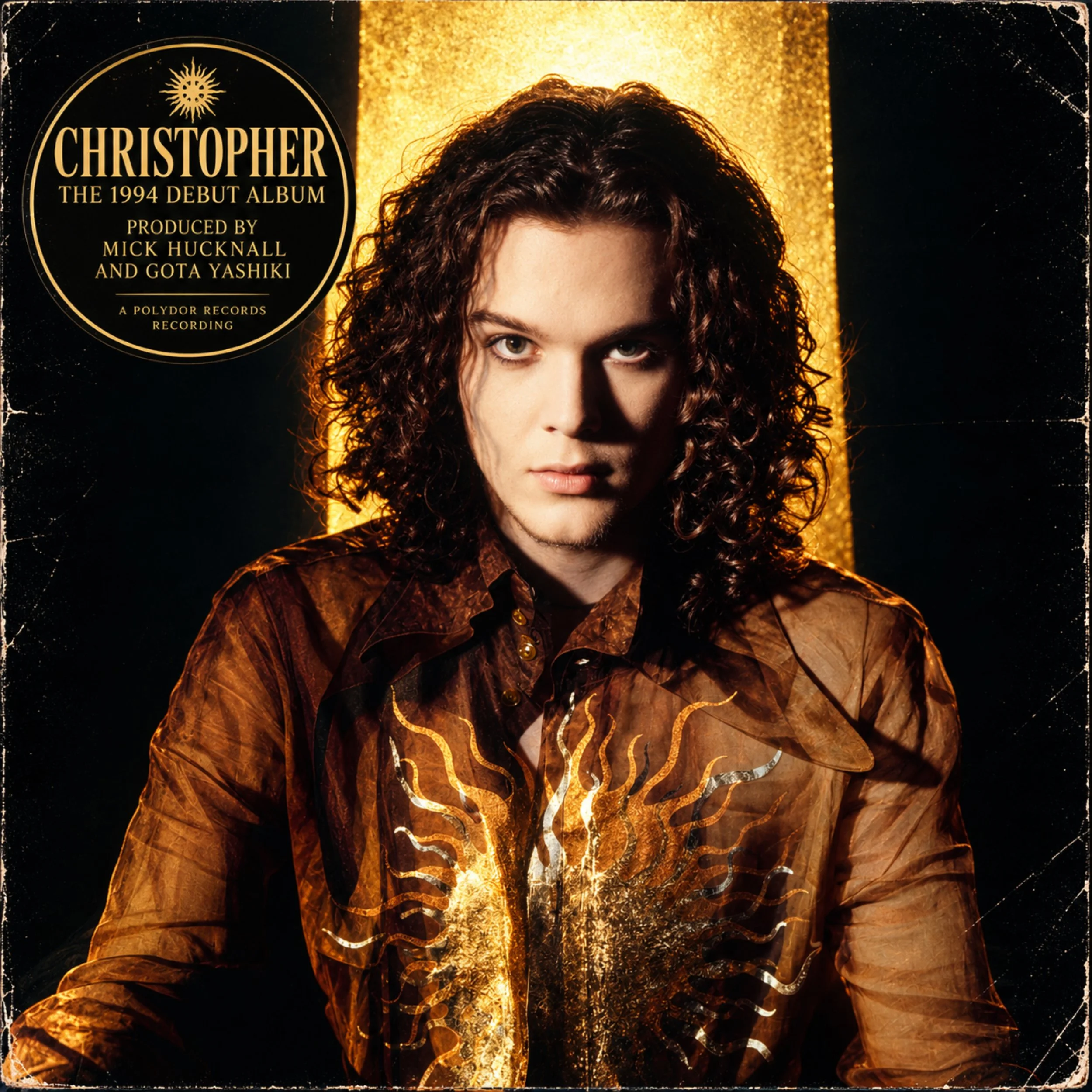
In 1994, Polydor Records introduced a extraordinary new voice to the UK music landscape with the release of Christopher—the self-titled debut from multi-instrumentalist, singer, and songwriter Christopher Braide.
Helmed by iconic Simply Red frontman Mick Hucknall alongside renowned producer and Simply Red/Soul II Soul rhythm architect Gota Yashiki, the album marked Hucknall’s debut outing as a producer for another artist. Recorded across premier European studios, the album showcased a precocious talent capable of weaving dramatic melodic hooks, baroque pop sensibilities, and soul-infused arrangements with rare authority.
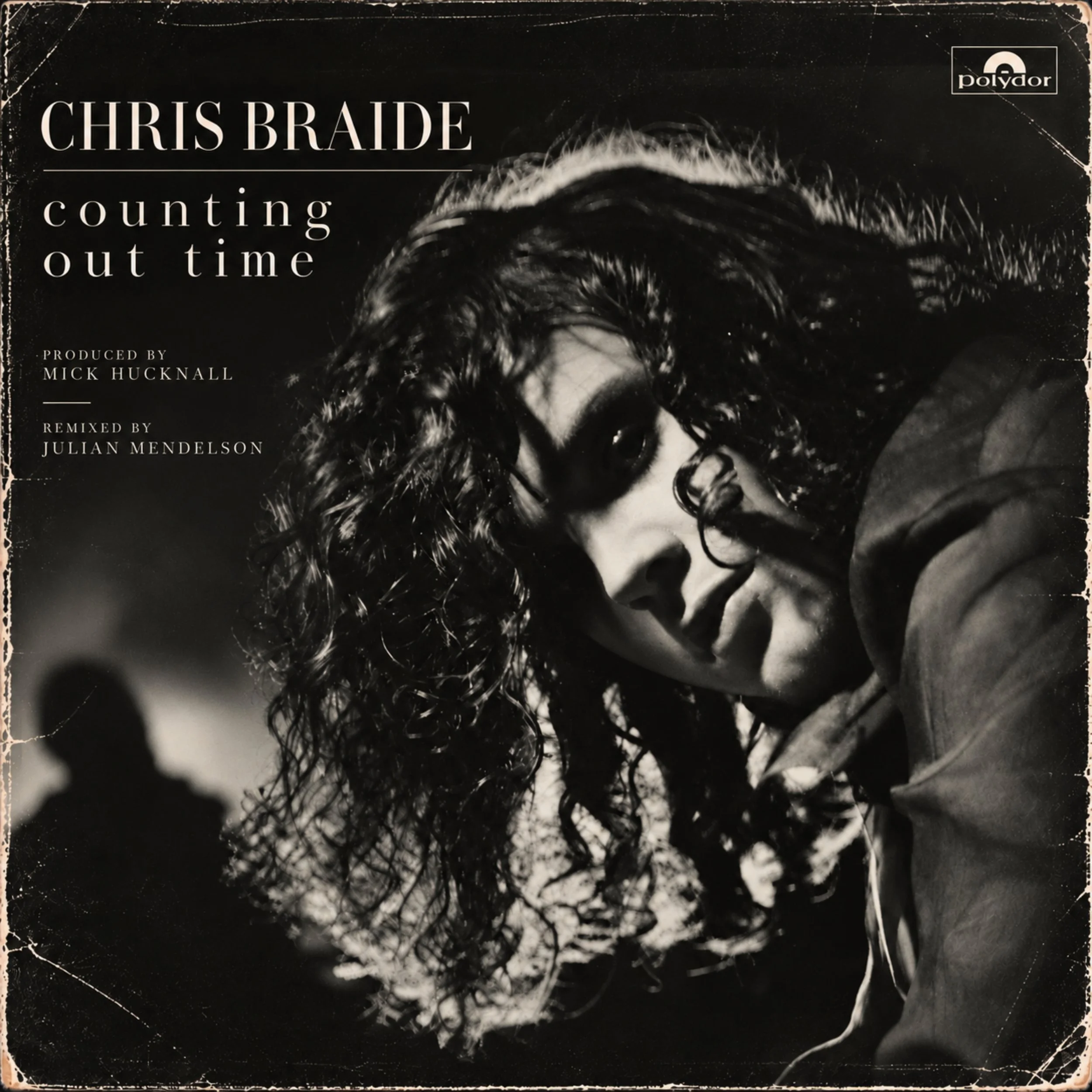
Featuring atmospheric singles like "Counting Out Time" and "The Choice Is Yours," the debut established a distinct visual and sonic identity: romantic, brooding, and musically uncompromising. Driven by striking vocal performances and intricate keyboard arrangements, Christopher signaled the arrival of an artist who would go on to become one of the most prolific and celebrated songwriters and producers of his generation.
Produced by: Mick Hucknall & Gota Yashiki
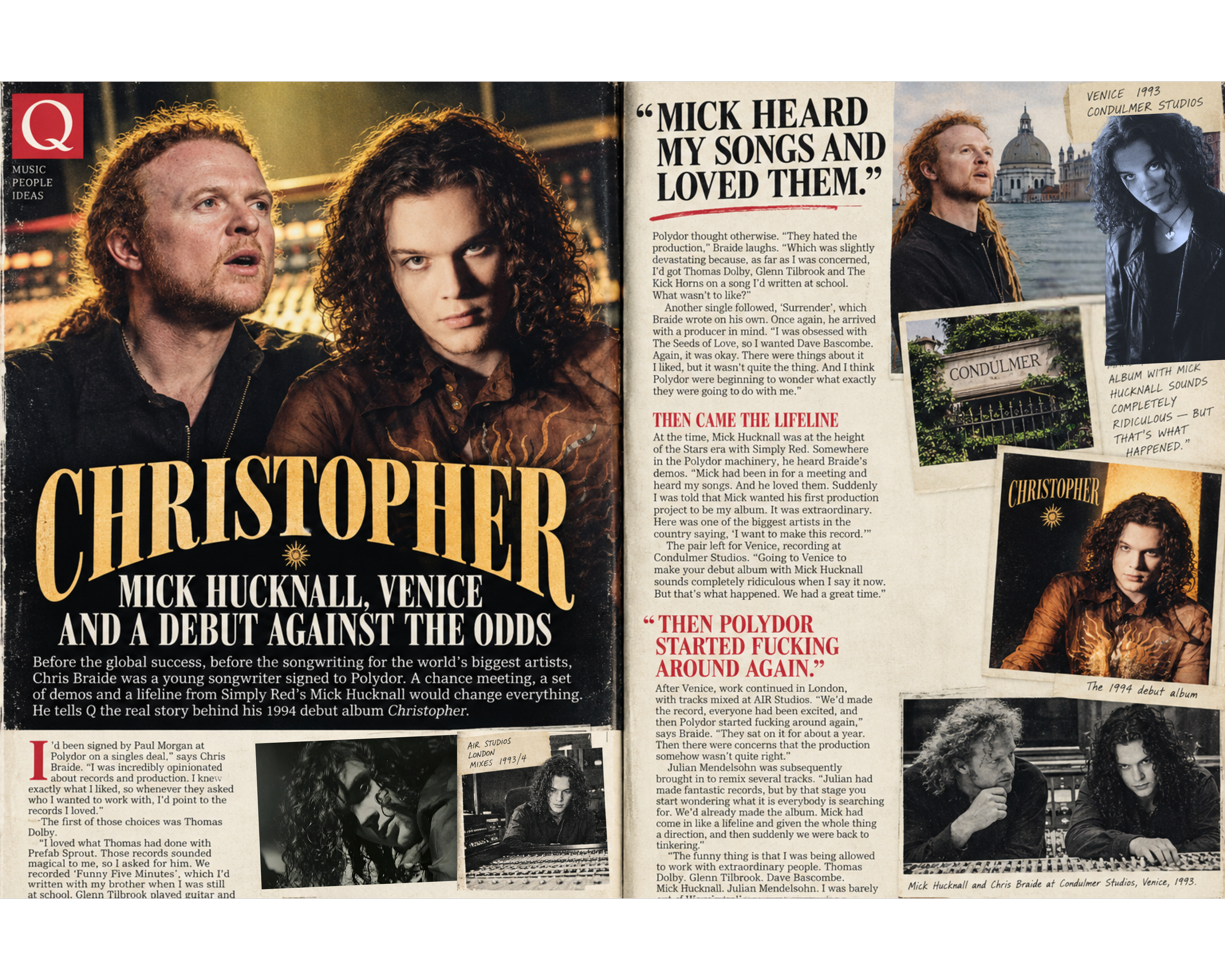
CHRIS BRAIDE ON MICK HUCKNALL, VENICE AND THE LONG ROAD TO HIS DEBUT ALBUM
Before the Grammy nominations, the multi-platinum songs and decades spent writing and producing for other artists, Chris Braide was a young songwriter signed to Polydor with a head full of records he loved and very definite ideas about who should make his.
The road to his 1994 debut Christopher was anything but straightforward. It involved Thomas Dolby, Glenn Tilbrook, The Kick Horns, Dave Bascombe, a frustrated record company — and, eventually, an unexpected intervention from Simply Red’s Mick Hucknall.
“I’d been signed by Paul Morgan at Polydor on a singles deal,” Braide remembers. “I was incredibly opinionated about records and production. I knew exactly what I liked, so whenever they asked who I wanted to work with, I’d immediately point at the records I loved.”
The first of those choices was Thomas Dolby.
“I loved what Thomas had done with Prefab Sprout. Those records sounded magical to me, so I asked for him. We recorded a song called ‘Funny Five Minutes’, which I’d actually written with my brother when I was still at school. Glenn Tilbrook played guitar and we had The Kick Horns doing these wonderful brass parts. I thought, ‘This is it!’”
Polydor thought otherwise.
“They hated the production,” Braide laughs. “Which was slightly devastating because, as far as I was concerned, I’d got Thomas Dolby, Glenn Tilbrook and The Kick Horns on a song I’d written at school. What wasn’t to like?”
Another single followed, “Surrender,” written by Braide alone. Once again, he arrived with a producer in mind.
“I was obsessed with The Seeds of Love, so I wanted Dave Bascombe. Again, it was okay. There were things about it I liked, but it wasn’t quite the thing. And I think Polydor were beginning to wonder what exactly they were going to do with me.”
Then came the lifeline.
ENTER MICK HUCKNALL
At the time, Mick Hucknall was at the height of the Stars era with Simply Red. Somewhere in the Polydor machinery, he heard Braide’s demos.
“Mick had been in for a meeting and heard my songs. And he loved them. Suddenly I was told that Mick wanted his first production project to be my album. It was extraordinary. Here was one of the biggest artists in the country saying, ‘I want to make this record.’”
For Braide, after two attempts at finding the right musical setting, Hucknall’s enthusiasm changed everything.
“He was a songwriter. That mattered. He heard the songs rather than looking at me as some problem that needed solving. There was a confidence to Mick at that point — understandably, because Stars was enormous — and I think some of that rubbed off on me.”
The pair left Britain and headed for Venice, recording at Condulmer Studios.
“Going to Venice to make your debut album with Mick Hucknall sounds completely ridiculous when I say it now. But that’s what happened. We had a great time. I was young, Mick was in this incredible period of his career, and suddenly we were in Italy making an album.”
The resulting record was warmer and more organic than Braide’s earlier singles: soulful pop built around his voice and songs rather than an attempt to impose an identity upon them.
“We weren’t trying to make a Simply Red album. Mick responded to what I was doing and helped make a record around it. There are some really strong moments on there. I can hear myself learning, but I can also hear things that were absolutely me.”
After Venice, work continued in London, with tracks mixed at AIR Studios.
And then, in classic major-label fashion, everything slowed down.
THEN POLYDOR STARTED FUCKING AROUND AGAIN
“We'd made the record, everyone had been excited, and then Polydor started fucking around again,” Braide says. “They sat on it for about a year. Then there were concerns that the production somehow wasn’t quite right.”
Julian Mendelsohn was subsequently brought in to remix several tracks.
“Julian had made fantastic records, obviously, but by that stage you start wondering what it is everybody is searching for. We’d already made the album. Mick had come in like a lifeline and given the whole thing a direction, and then suddenly we were back to tinkering.”
It is a story that will be familiar to almost anyone who passed through the major-label system of the period: a young artist signs, makes the record, and then discovers that finishing an album and persuading a record company that an album is finished can be two entirely different things.
Braide can laugh about it now.
“The funny thing is that I was being allowed to work with extraordinary people. Thomas Dolby. Glenn Tilbrook. Dave Bascombe. Mick Hucknall. Julian Mendelsohn. I was barely out of Warrington! So even when it was frustrating, I was learning all the time.”
And Christopher remains a snapshot of that education — a young songwriter caught at the moment before his career took an entirely different turn.
“I don't listen to it thinking everything is perfect. It isn't. But I hear a time in my life very clearly. I hear Venice. I hear AIR. I hear Mick believing in the songs when I really needed somebody to believe in them. And I hear myself trying to work out what kind of artist I was going to be.
“We had good times making it. And it has some strong moments. The rest is history.”